Opening…
A traveler's guide to the world under Tolmar
Welcome
to the Kett
From the world of Litany of Tolmar
Before you go inA Place, Not a Story
What follows is not a story. There are no plots here and nothing to spoil. It is a guide to a place: the Kett, the world of Litany of Tolmar.
The Kett is a nation of dwarves, orcs and trolls living inside a mountain that sealed itself shut twelve hundred years ago. It runs on steam, brass, fire, and a kind of magic made of sound. It is grimy and beautiful and a little frightening, and everything in it has a smell, a weight and a price.
Think of this as the tour you would get from someone who lives there: what the stone feels like under your hand, who you would pass on the stairs, what the air costs, what people sing, and what they whisper about the dark.
Take your time. Nobody in the Kett has seen the sun in a very long while. They are used to waiting.
Part OneThe Mountain
Imagine a mountain range thousands of miles long, running down one side of a continent. Now imagine one of its peaks is hollow, and full of people.
The mountain is called Tolmar, an old word meaning the stone that holds. The range it belongs to is Selunethar, the long spine. The nation inside is the Kett, from an old word for hearth and home.
Twelve hundred years ago the dwarves of Tolmar closed its great door, the Seal, and never opened it again. Generations have been born, lived and died without once seeing the sky. They have forgotten how. To a dwarf of the Kett the open air is not freedom. It is a void, and the word for it, mirr, survives only as a curse. Go to mirr.
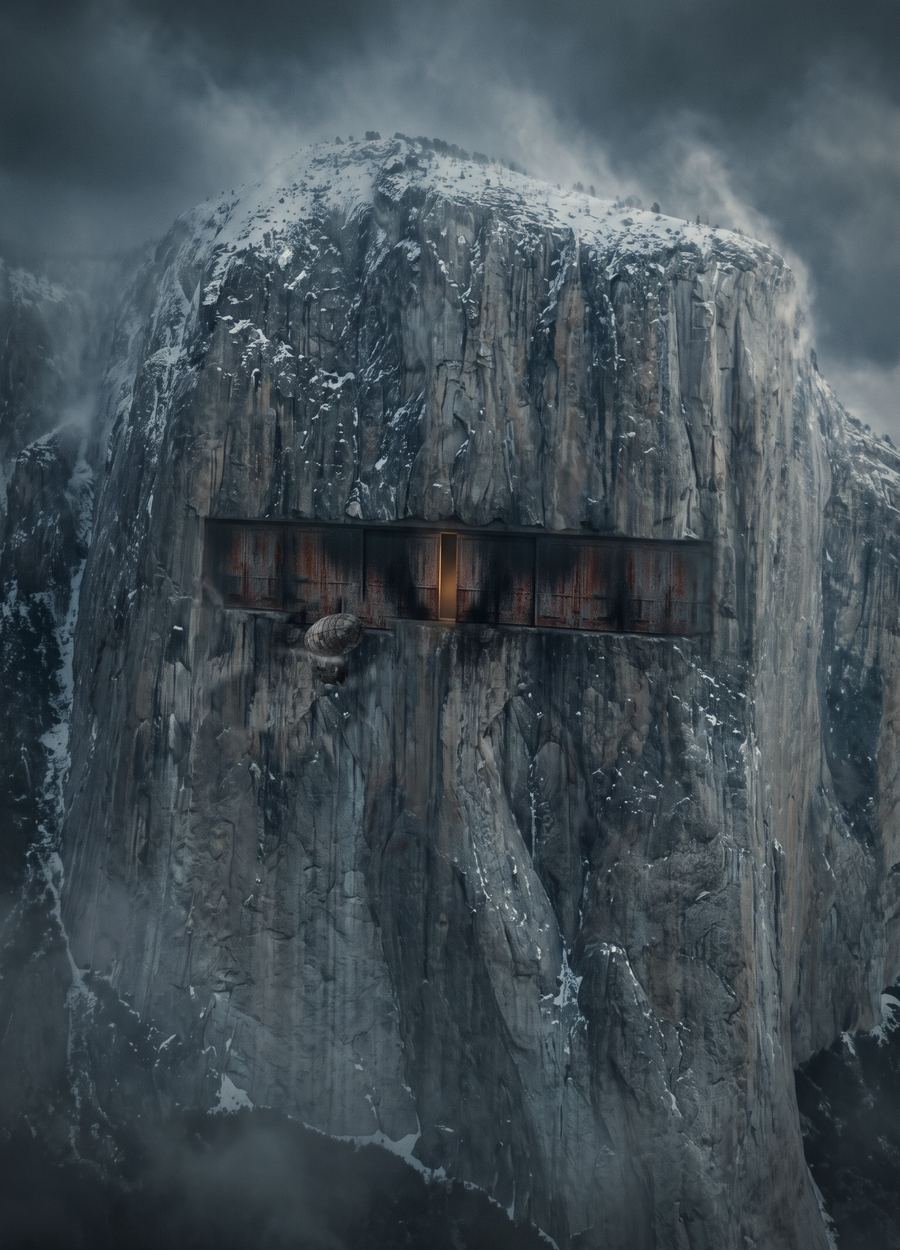
There is still one way in and out: the High Doors, iron shutters high on the mountain's face where airships dock. Wind howls through the halls behind them. Most dwarves cannot bear to look out. The few who work there keep their backs to the opening, and the dread they feel has a name: being sky-sick.
The three peoples of the Kett do not always like each other. But the mountain is their shelter and their greatest defense, and the world outside knows it. To threaten Tolmar is to unite everyone inside it, instantly and completely, against you. So the world leaves the mountain alone.
And Tolmar is only one mountain. The range holds other cities, each a little different from its neighbor and wholly different from one a thousand miles away. This guide stays inside one of them.
From the vents to the rootHow the Kett Is Stacked
Life in the Kett is arranged by height, and height is arranged by air. The higher you live, the cleaner you breathe, and the richer you are.
- The High Doors and the vent-crowns. Airship docks, the great air intakes, and the Groves.
- The Upper Halls. The Thanes' houses, the Guild Hall, and the Chronicle Halls, where the carved history runs for miles.
- The Middle Halls. Craftsmen and workshops, the Cross and the Steams. The busy heart.
- The Quiet Levels. Off to one side, sealed and silent.
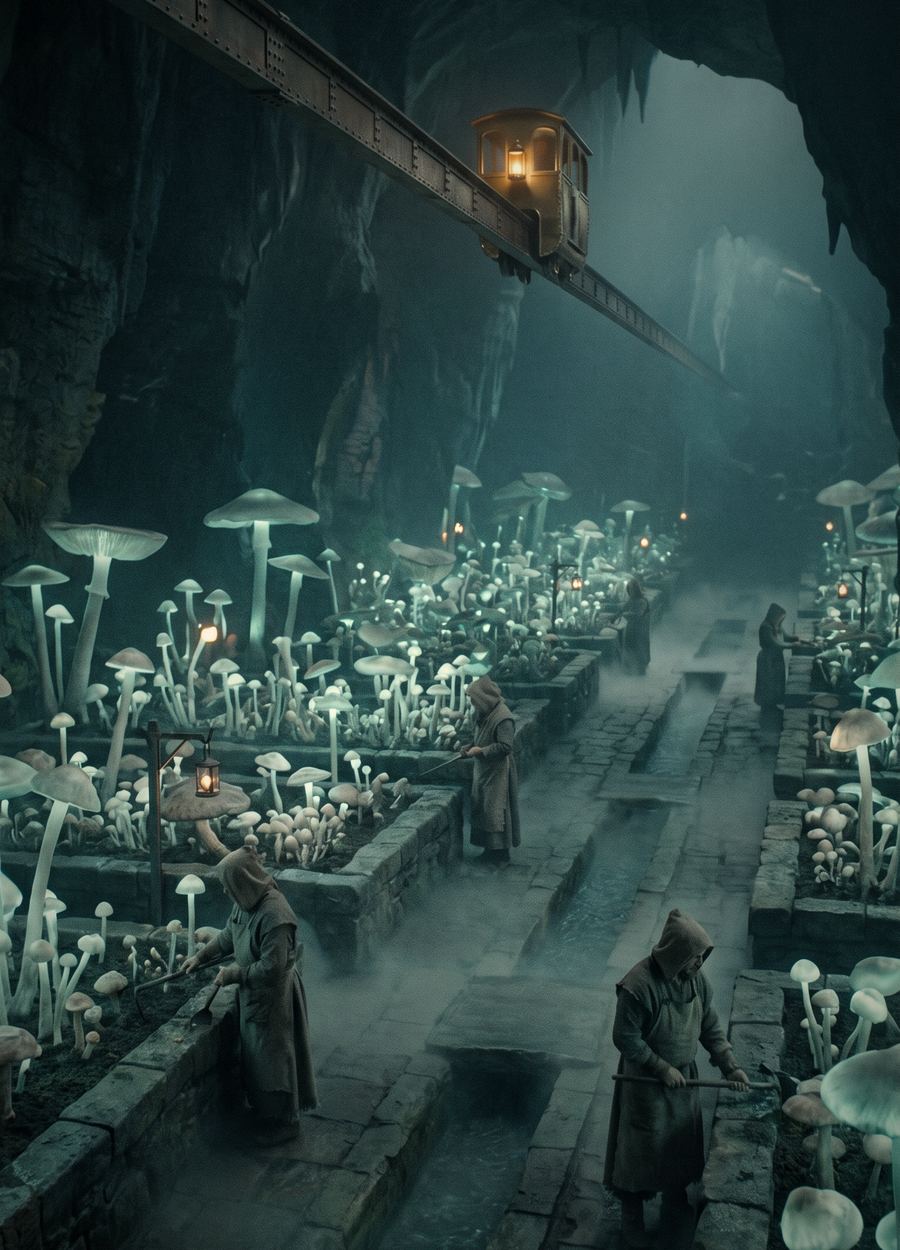
- Lower One to Lower Twelve. Bunk warrens, brothhouses, the fungal farms. The lower the number, the better the air.
- The Works. The tiers of the Berrat, the great forge, where the Brand shift roars.
- The Warmth and the Boiler. At the root of the mountain.
- The Sumps and the Seal. On the lowest, coldest slope.
The Lines run across all of it, steam trains through great bored tunnels. The lifts and the Long Stairs run up and down.
At the very bottom, the Kett's waste piles up against the great sealed door, and the poorest people in the mountain live in shacks leaning on it, listening to the wind whistle through its seams.
Part TwoWhat It Feels Like
If you were set down in the Kett with your eyes closed, you would know where you were before you opened them.
The smell. Everything smells of brandstone, the coal-like fuel that feeds the forge. Its smoke is bitter and faintly sweet, like burnt clove over wet iron, and it sits at the back of your throat. Newcomers taste it for days. People born there only notice it when it is gone.
The sound. There is never silence. Engines hum, pipes hiss, and a vibration comes up through your boots from the forge far below. True quiet exists in only one place, the abandoned galleries called the Quiet Levels, and it unnerves anyone who goes there.
The light. Amber, pooled under brass-caged electric lamps, with hard black shadows in every carving and corner. Bright enough to work by, dark enough to hide in.
The stone. The old stone of the upper halls is smooth, polished glossy at shoulder height by centuries of hands, with a darker band where everyone touches it walking past. Thresholds dip from millions of steps. The new-cut stone of the industrial levels is raw, scarred by drills, sharp-edged. It looks wounded.
And everywhere, the grime: an oily film of soot that comes away on a fingertip, walls that sweat with condensed steam, drip-lines stained rust-orange, white mineral blooms in damp corners, and a fine grey dust on every flat surface that glitters faintly with metal filings. The crews who clean it never finish.
What they eat. The Kett grows its food in vast dim fungal farms. Food tastes of salt, iron, earth and smoke: fungus in a hundred forms, the meat and cheese of tallowbeasts (pale, blind grazers penned beside the farms), and blind fish from the underground rivers. Salt is mined, so everything is salted and fermented. Water always tastes of minerals.
What it's made of. Stone, mostly. Tables, benches, bowls and mugs are all stone, because wood barely exists under the mountain. A wooden chair is wealth. A wooden anything is wealth. The common cloth is felt pressed from fungus fiber, grey-brown, warm and never white. Forge workers wear stonewool, spun from molten rock, which will not burn and slowly scars the lungs.
What comes from outside. Wood, spice, and above all color. The dwarves cannot make dyes, so a dwarf in deep red has either money or orc friends.
Part ThreeThe Dwarves
The dwarves built the Kett, and they run it. They are proud, precise, and very good at pretending they have always lived this way.
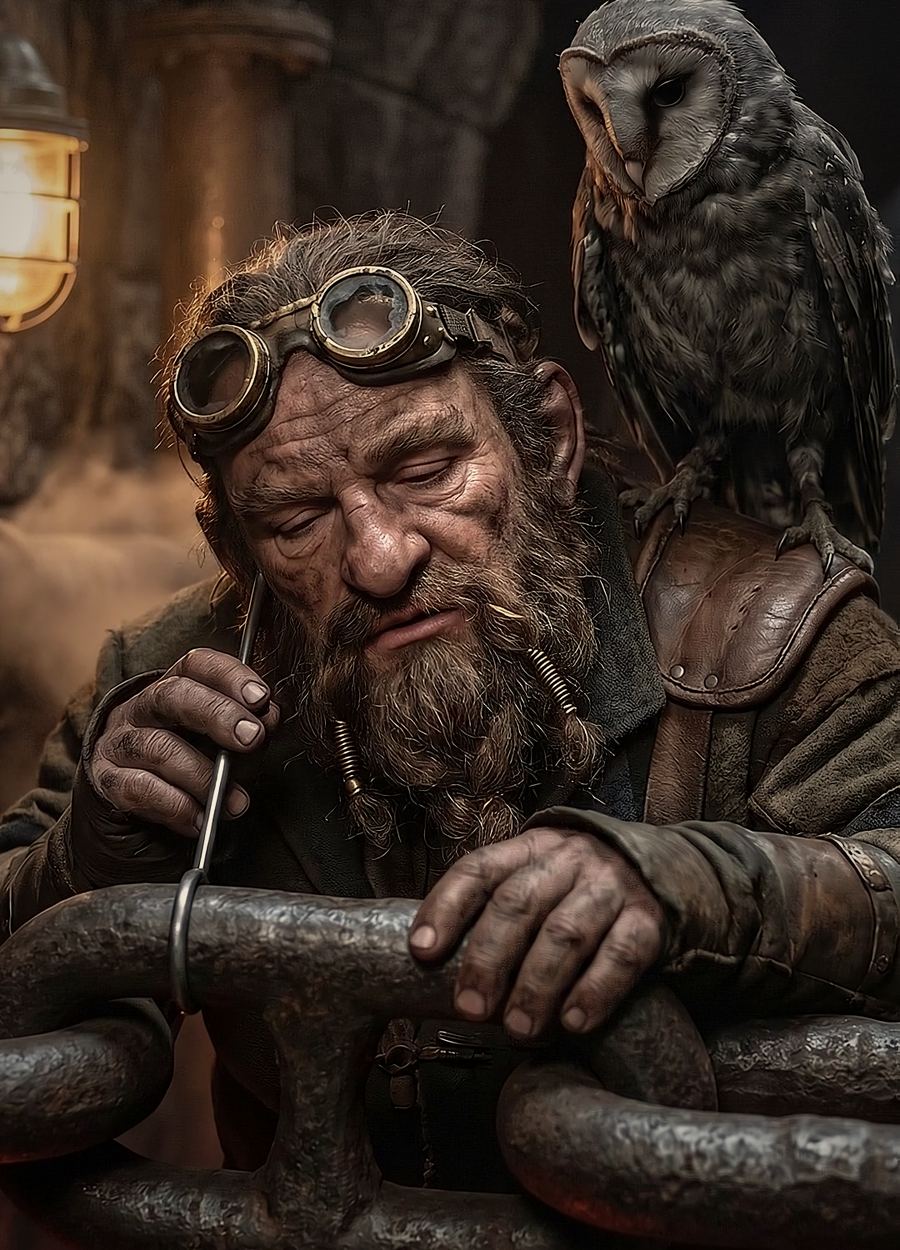
Forget the dwarves of old stories. There is no ale here: no grain means no brewing, and drunkenness near machines gets people killed. And there are very few long beards. A beard caught in a flywheel kills, so working dwarves keep theirs short, singed, or bound tight with brass wire. A long, flowing beard means you never go near a machine. Only Thanes and Guildmasters wear them.
The working vice is grit, a mineral stimulant chewed through long shifts. It stains teeth and gums rust-brown, so a laborer's smile marks their class as surely as a long beard marks a lord's.
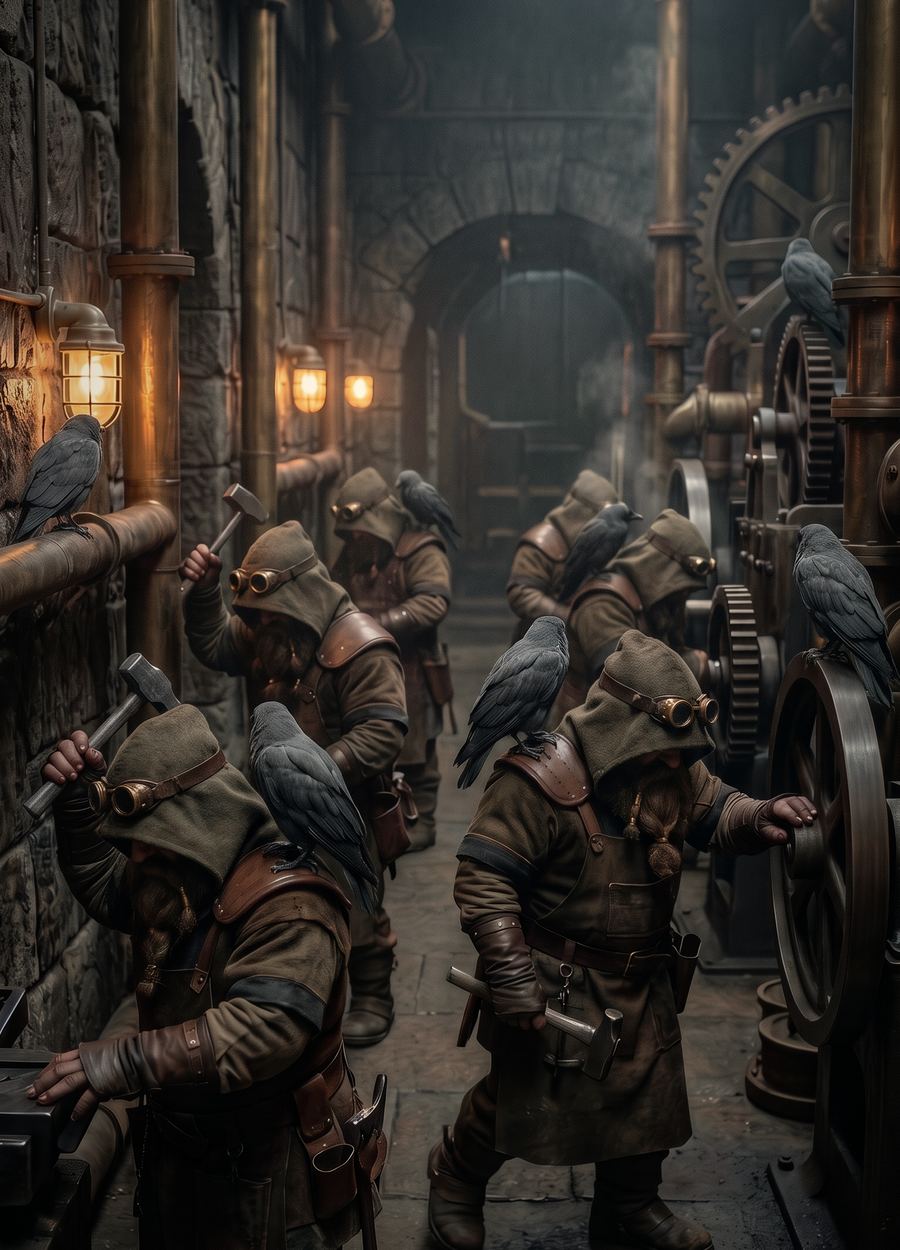
A dwarf of the Kett is steam and brass from head to toe: layered felt in soot-grey, earth-brown and iron-black; heavy aprons and bound sleeves; brass buttons and buckles; goggles pushed up on the brow; and, in the lower levels, a breath-cloth over the mouth. Guild rank is worn as small metal gauge-pins at the collar. Every working dwarf wears a leather pad on one shoulder, rubbed smooth by talons, because every dwarf has a Grimmet.
Visitors often ask how to tell a dwarf's sex at a glance. Mostly you can't, and the dwarves don't see why you'd want to. The same is true of orcs.
A home. Most homes are carved cells, stone underneath, softened with felt hangings. Every home has a hearth niche with a steam-heat pipe, and a brass air meter on the wall showing how much air the household is allowed. Everyone knows everyone's number. It is the Kett's truest mark of class.
Families of standing also have an armor niche, an arched alcove where the family's heirloom armor stands. That armor matters more than almost anything. The old swords, axes and shields are relics now, but a family's armor is kept, named, and polished as ritual. At every funeral and every Stoking the eldest recites its litany: the name of every ancestor who wore it, and the blood each one spilled. The older the litany, the prouder the family.
Some families have no armor at all, and nobody asks them why.
A life
- Birth means paying for a child's first measure of air. Families who cannot pay don't register, and their children grow up unmetered: no record, no standing, legally breathing someone else's air.
- Childhood in the upper halls means learning to read the carved script. In the lower levels it means work. Children small enough to crawl the air ducts are called ductlings, and not every ductling comes back out.
- The mark-passing is the most important day of a craftsman's life. A master strikes their own maker's mark onto their apprentice's first finished piece, and from then on the apprentice carries it.
- Hearth-joining is marriage: two households' air combined into one. Divorce means uncoupling it, which is public, expensive and humiliating.
- Old age comes slowly. A dwarf lives about two hundred and fifty years: apprenticed in their thirties, a journeyman around sixty, a master by a hundred and twenty. For those who can afford it, old age means sitting on the benches by the upper vents, where the air is best.
Part FourThe Orcs
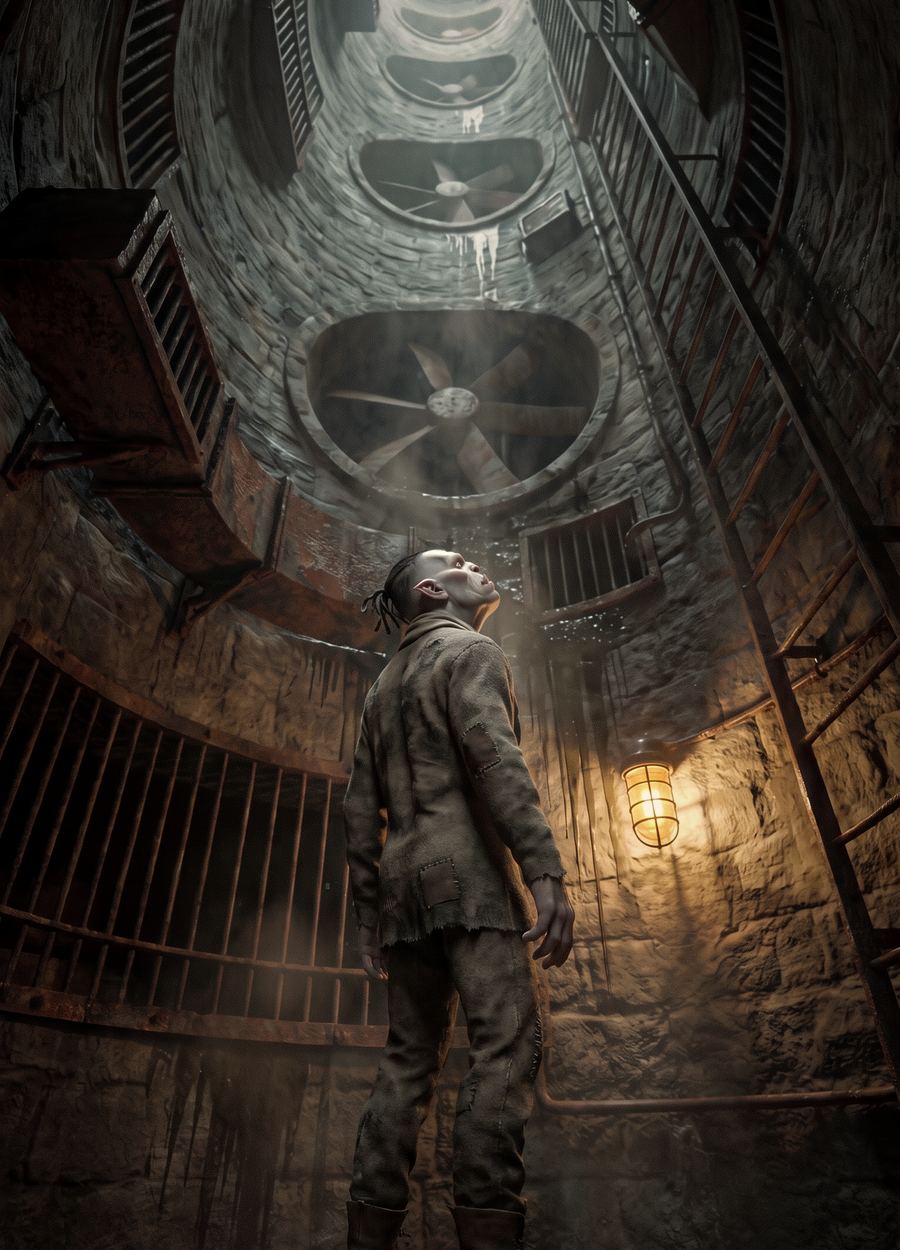
The orcs are the only people in the Kett who are not afraid of the sky. That makes them indispensable, and it makes them resented.
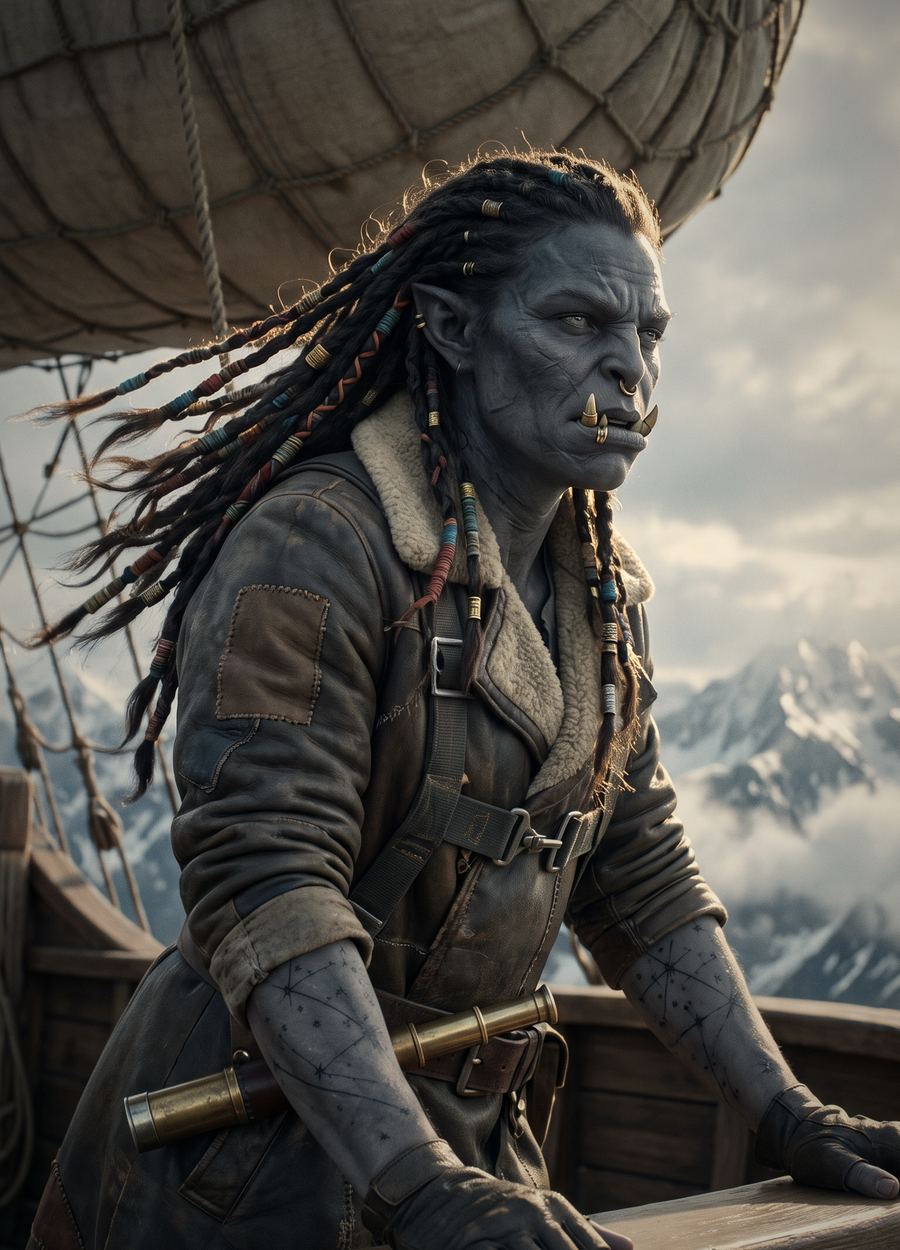
These are not the green brutes of other stories. Orcs are a mountain-surface people, built for altitude and wind: tall, lean and long-limbed, a head or more above a dwarf, with deep chests for thin air, slate-grey to blue-grey skin, small lower tusks, and large pale eyes made for glare. They came in from the high slopes long after the Seal closed, through the only door still open.
Only orcs can crew the airships. Only orcs trade outside and bring back what the mountain cannot make. That is their leverage and their stigma at once. Dwarves call them mirrlings, sky-things, and say they "smell of mirr."
Sky crews and grounded orcs
There are two kinds of orc in the Kett, and you can tell them apart at a glance.
- Sky crews are weathered dark. They cap their tusks in brass or silver, one cap for every crossing survived. Star charts and wind routes are tattooed along their arms, and their history hangs from their heads in knotted cords braided into their hair: every voyage, every debt, every name.
- Grounded orcs were born inside the mountain and have never flown. They are pale, ashy grey, with bare skin, bare tusks, and nearly empty cords. The Kett has even hardened their speech; sky orcs call it being stone-mouthed. They are scorned by dwarves and pitied by their own kin.
A sky orc is named for her ship: Wethra of the Fahl Ushen. A grounded orc has no ship, so he is named for the level where he was born: Uskaf of Lower Nine. One name tells you whether someone has ever seen the stars.
Orcs cannot own property in the Kett, cannot hold a Guild seat, and live in the worst-air levels because "their lungs can take it." Their word counts for less than a dwarf's in any inquiry.
They are also the short-lived people of the Kett. A hundred years is a long life for an orc, and less for a grounded one breathing the worst air. A whole crew can be born, fly and die while a dwarf barely greys. Dwarves find that unsettling. Orcs find the dwarves' patience unbearable.
Part FiveThe Trolls
The trolls were in the mountain first. The dwarves' histories say the deep places were empty when they dug down. The trolls remember otherwise.
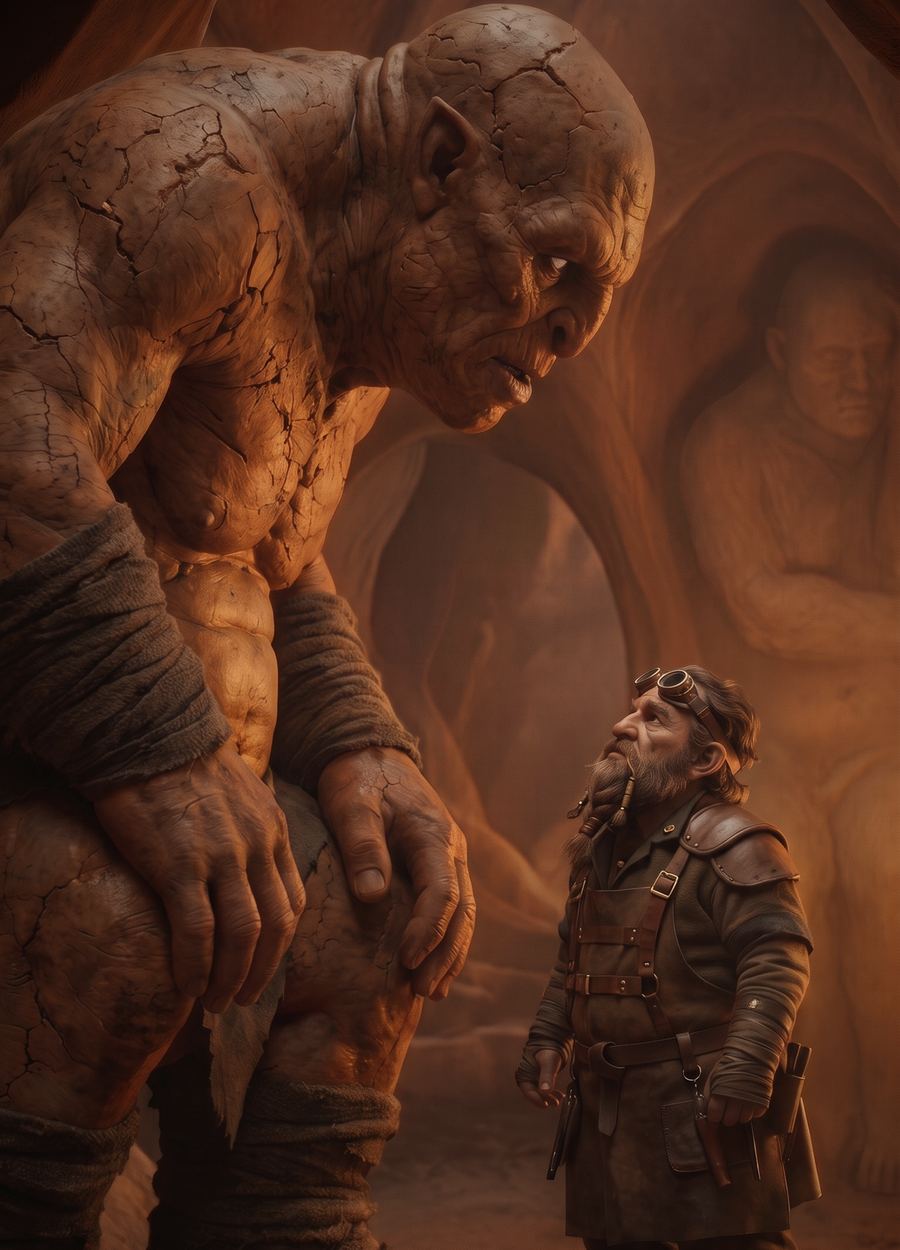
Trolls are enormous. A dwarf standing beside one reaches about to its knee. They are dense and slow-moving, but never clumsy, and the floors of their halls are reinforced to bear them. Their skin is like fired clay, grey-ochre and crazed all over with fine cracks, and it holds heat like a kiln wall: touching a working troll is like touching a warm stove. Their eyes are small and nearly white, made for the glare of the forge. They go always barefoot, because they feel the mountain through their feet.
They are as clever as anyone in the Kett, and they know exactly what they are worth. Only trolls can stand at the hottest fires of the forge. Without them, the Kett's industry stops. Dwarves and orcs alike look down on them, and everyone knows the nation would crumble without them.
So trolls are not owned and not paid in coin. They work under the Compact, an agreement renegotiated every Stoking by their Speaker and backed by all of them together. One troll can be ignored. All of them cannot.
They live in their own deep halls around the forge, called the Warmth, which were never carved. They were sung into shape: smooth, round and flowing, with no straight lines or square corners. To a dwarf, it looks like being inside something alive.
The song
Trolls refuse to write anything down. Stone can be recut; a song sung by many voices would need every singer to agree to a lie. Their whole history lives in a single great song, and every troll learns all of it.
A troll can live two or three thousand years, and their childhood lasts longer than a dwarf's entire life. The very oldest trolls alive today were already alive when the Seal was closed.
When many trolls sing together, the sound is deafening to everyone else, and it carries a power the Kett fears in its bones: enough troll voices, singing together, could bring the mountain down. The Kett quietly limits how many trolls may gather in one place. The trolls let it, for now.
Of two peoplesBrasskin
Dwarves and orcs fall in love more often than either people likes to admit. It isn't forbidden, and in the lower levels it is common, but couples are snubbed by both sides.
Their children are called Brasskin, after brass, the alloy of two metals that is stronger than either. They have warm bronze-grey skin, somewhere between dwarf ruddy and orc slate, and pound for pound they are the strongest beings in the mountain: a dwarf's density and endurance, an orc's reach and lungs. Everyone wants them for heavy work, and nobody wants to sit beside them afterward.
Each people has a cruel word for them, drawn from its own trade. Dwarves say Slag, the waste skimmed off molten metal. Orcs say Shoffa, ballast, the dead weight dumped first when a ship must climb. The orcs' kinder word is Hwennah, crosswind: a wind from two directions at once, something a good sailor learns to ride.
Part SixThe Grimmet
Every dwarf has one. They are to the Kett what dogs and cats are to us, and a good deal more useful.
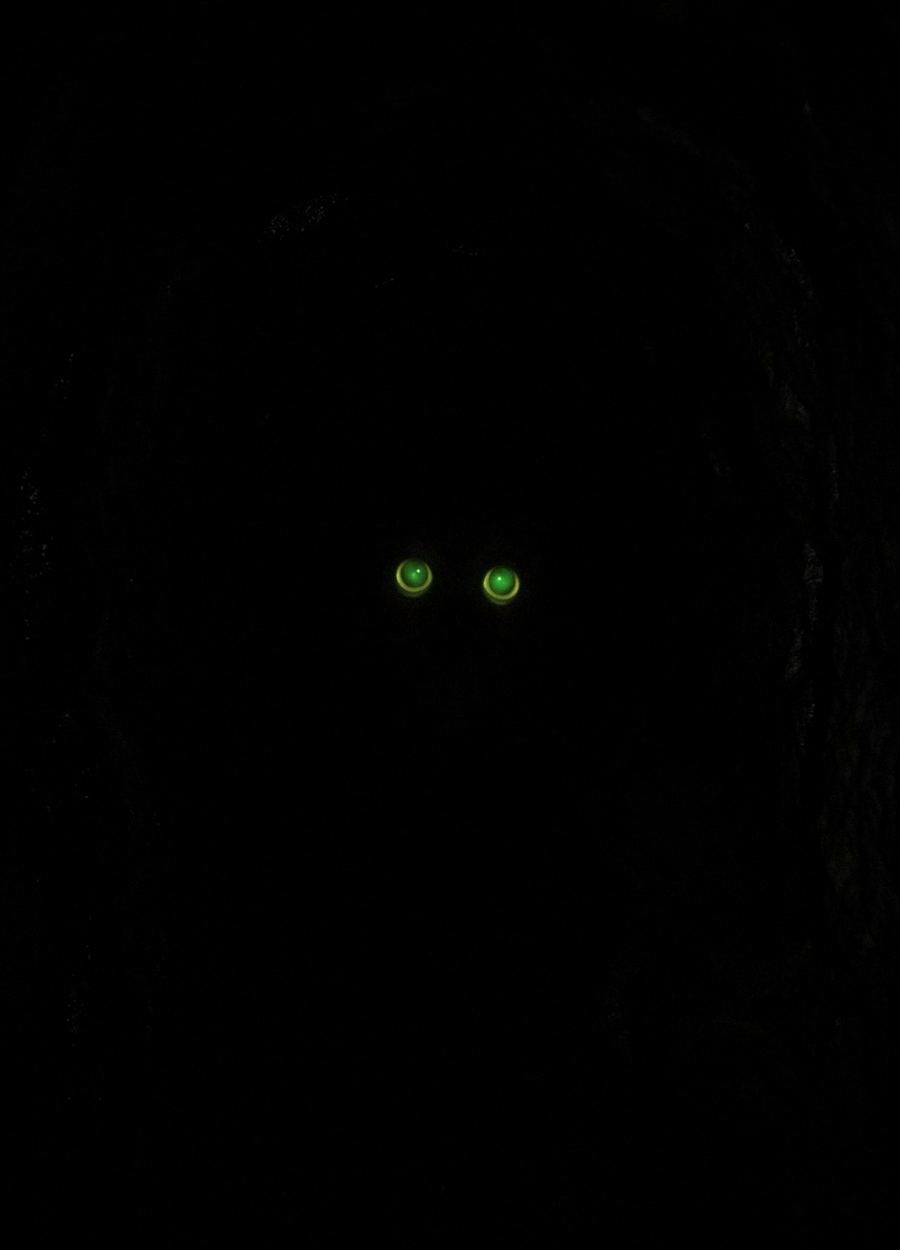
Grimmet are raven-sized birds built for tunnels: short broad wings for tight turns, heavy feet for clinging to pipes and chains, matte grey feathers that shed soot with a shake. Their faces are shaped like an owl's, a shallow feathered disc that funnels sound to their ears, with large dark eyes that shine green-gold in the dark. In an unlit tunnel, a Grimmet is two glints and nothing else.
They are the Kett's early warning. A Grimmet goes sluggish and puffs up before a dwarf can feel bad air. It feels the rock shiver through its feet before a collapse. And it freezes, staring, when magic is about to happen nearby. They have exactly one call, a single harsh crack of sound kept for mortal danger, and when a Grimmet makes it, the whole hall stops dead.
Otherwise they speak with their bodies:
- a head bob: yes, all's well, go on
- a head cock, face turned: listening
- feathers rising: unease
- frozen still, facing one way: something is building there
- beak-tapping on metal: look here
They can mimic speech, but in a familiar it is almost always play. Some have favorite words. One tinker's Grimmet is notorious for cursing.
A Grimmet rides on its dwarf's shoulder and eats from its dwarf's own plate, which is the bond, renewed every day. They live three to four hundred years, so they outlive their dwarves as a matter of course; most will know two or three in a lifetime. At a funeral, the dead dwarf's Grimmet sits through the whole rite in silence. They bond only with dwarves, but they love the Warmth, and perch on working trolls for the heat. Dwarves quietly resent it.
Part SevenThe Siltwardens
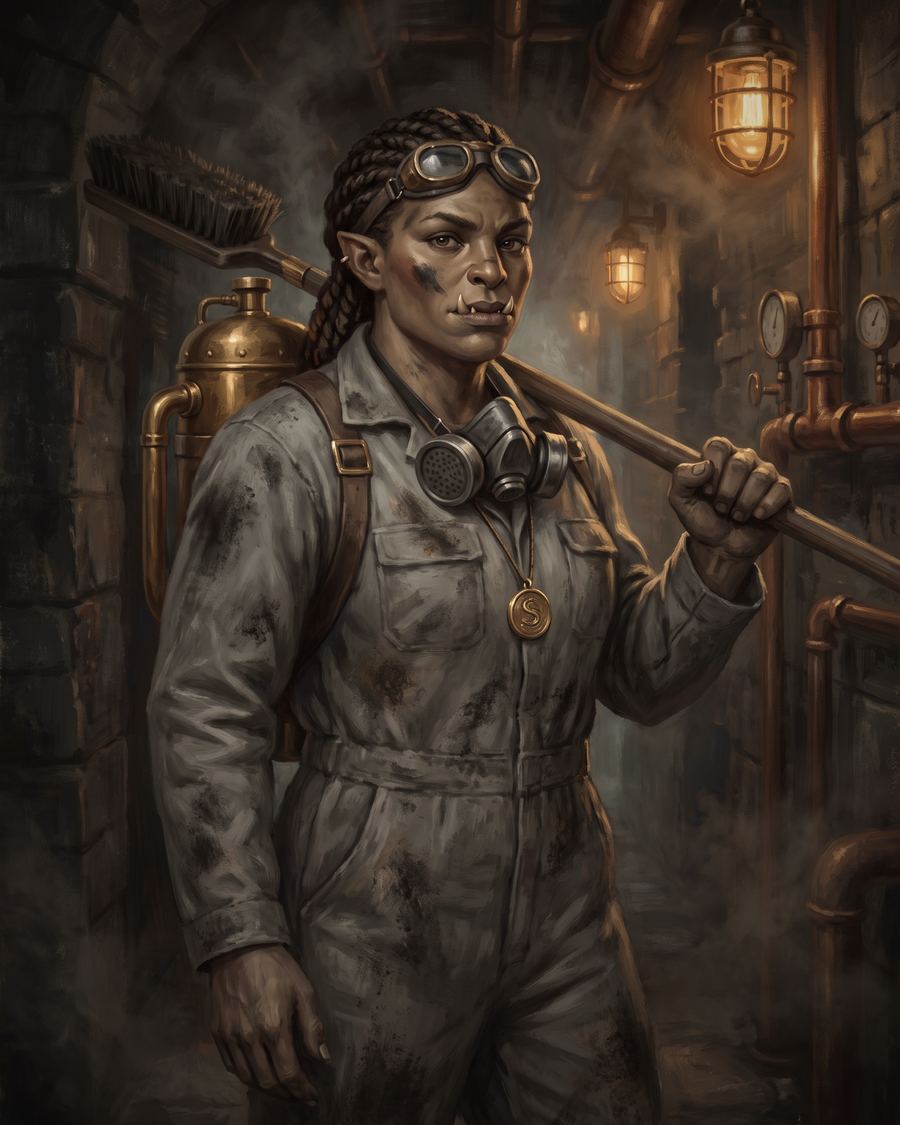
Someone has to clean the mountain. The Siltwardens (Siltwards, most people say, and down below just Silts) are the crews who sweep the soot, scrape the vents and haul the dust, shift after shift, and never finish.
They are mostly lower-level dwarves and grounded orcs, whose height reaches ledges and vents a dwarf can't. You will know them by their ash-grey felt coveralls, goggles, and breath-masks with filters of pressed charcoal fungus. Nearly faceless, so nobody really looks at them. Their brass suction packs, the blowers, hiss to announce them.
That is a mistake, because the Silts see everything. They walk every passage in the Kett, and dust falls at a steady rate in any given hall, so a good Silt can read how long ago someone stood in a place. At the end of each shift they scratch soot-tallies into the grime, in marks only Silts can read: who passed through, what was found, what was out of place. To anyone else, scratches in dirt.
Everything they sweep goes down the chutes to the Sumps. What kills them is the grey cough, lungs slowly filled with silt.
Part EightA Day in the Kett
The forge never stops, so neither does the Kett. Nobody has seen a sunrise in living memory. Time is kept by fire.
A day is a turn, and every turn has three shifts, named for the work:
- Brand, the hot shift: the heaviest forge work, the loudest engines, every lamp full.
- Ash, the maintenance shift: repairs and inspections, the tinkers' hours.
- Silt, the cleaning shift: the quietest part of the turn, when the crews sweep and the lamps come down.
Shifts change on the Blow, a deep steam note from the forge relayed hall to hall by whistles. You feel it in your chest before you hear it. Everyone still calls it "the bell," though there have been no bells for centuries. Ringing can crack stone.
During Silt the lamps are dimmed across the whole Kett: a manufactured night. The upper halls control their own lamps. In the Kett, wealth means owning your own darkness.
Everyone sleeps in their off-shift, so a third of the Kett is always asleep, and in the lower levels three workers share one bunk in rotation. A lower-level bed is never cold.
The Hush
Once every turn, just before Silt, the whole Kett goes silent for one long minute. Engines idle. Voices stop. Hands go still. It began as a safety rule, listening for the rock shifting, and has become something close to prayer. Grimmet turn their faces to the walls. For that one minute, a sound anywhere would carry everywhere.
The year
There are no seasons underground. The Kett's year is a Stoking, named for the great yearly restoking of the forge, and it is the Kett's one real festival: every lamp turned full for a single turn, the only time the lower levels see bright light. The Compact is renewed. Ages, debts and contracts are all counted in Stokings, from the year of the Sealing. As this guide is written, the Kett is in its twelve hundred and fourth.
The orcs, meanwhile, keep real seasons from outside, so the two peoples live on different calendars.
Part NineAfter the Shift
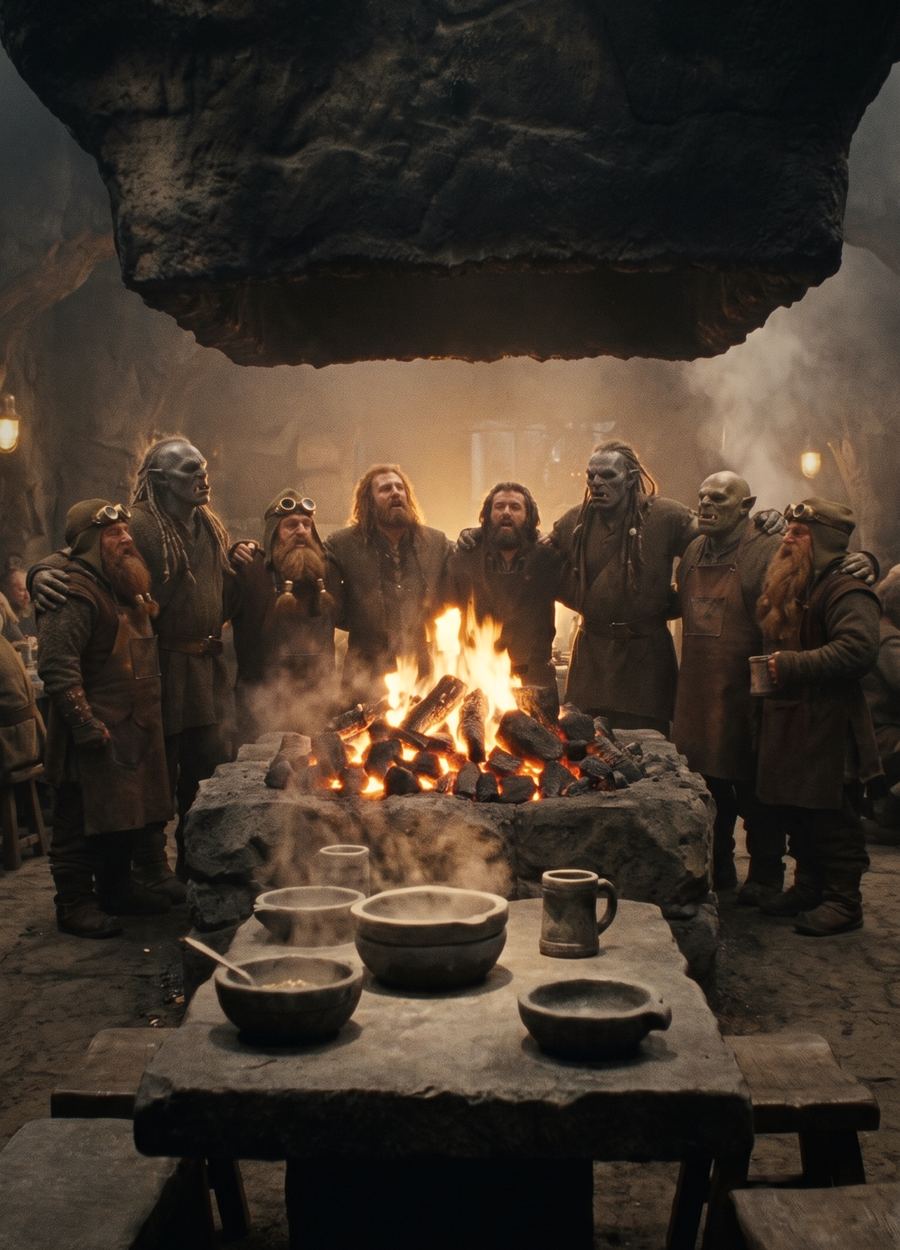
The brothhouses. Taverns without ale. Dwarves and grounded orcs crowd the same stone benches at every shift change for hot salt broth, fungal teas and grit. They are loud and steamy, the place where gossip moves and fights start. The tables are stone, the mugs are stone, and the walls are black with brandstone char.
The games. In every brothhouse, someone is playing Stones, a betting game thrown with six carved stones whose faces are shapes, not numbers, played for draughts at every shift change in the Kett. Tinkers bet on Gauge, guessing a part's weight before it's measured, and are banned from most tables for being too good at it. The upper halls play Seams, a board game of undermining your opponent's tunnels until they collapse. And in every lower-level corner, someone is throwing Bolts, knucklebones played with nuts and bolts.
The Measure. The finest music in the Kett is not played. It is sung, in the lower halls, on the good nights, by dwarves amongst orcs and orcs amongst dwarves, keeping rhythm and tempo with one another in unaccompanied voices that swell and fill the stone. When someone says "they're keeping the Measure tonight," people come from levels away to listen. The upper halls have choirs too, and they are fine. But without orc voices in the mix, it is never the same.
The rest of the Kett's music is played on brass drone-pipes and low reed-horns, and it is tuned slightly wrong on purpose, an old tradition so that no song can ever tune anything (more on that under Magic). Everyone thinks that is simply how music sounds. A tinker with a perfect ear finds most music faintly unbearable, and has never known why.
The Steams. Hot mineral baths heated by the forge's runoff, and the Kett's great social hub, because getting clean is a luxury. Marble pools for the upper halls, crowded tanks for workers, and one shared pool at the bottom where the peoples mix. Everyone is bare: no rank pins, beards unbound. It is neutral ground, where deals are made and secrets drift through the fog.
Stories and art. Tale-tellers work the Cross for draughts. The best-loved stories are ghost stories of the Quiet Levels, and one whispered legend: that those Given to the Mirr didn't all die, and something outside is made of them. Everything in the Kett is engraved, from tools to rails to lamp cages, and a good engraver is respected almost like a master tinker. The Silts make soot drawings in the grime with a fingertip, beautiful, and wiped away next shift.
Part TenPlaces
A handful of places every child in the Kett knows, whether or not they have ever been there.
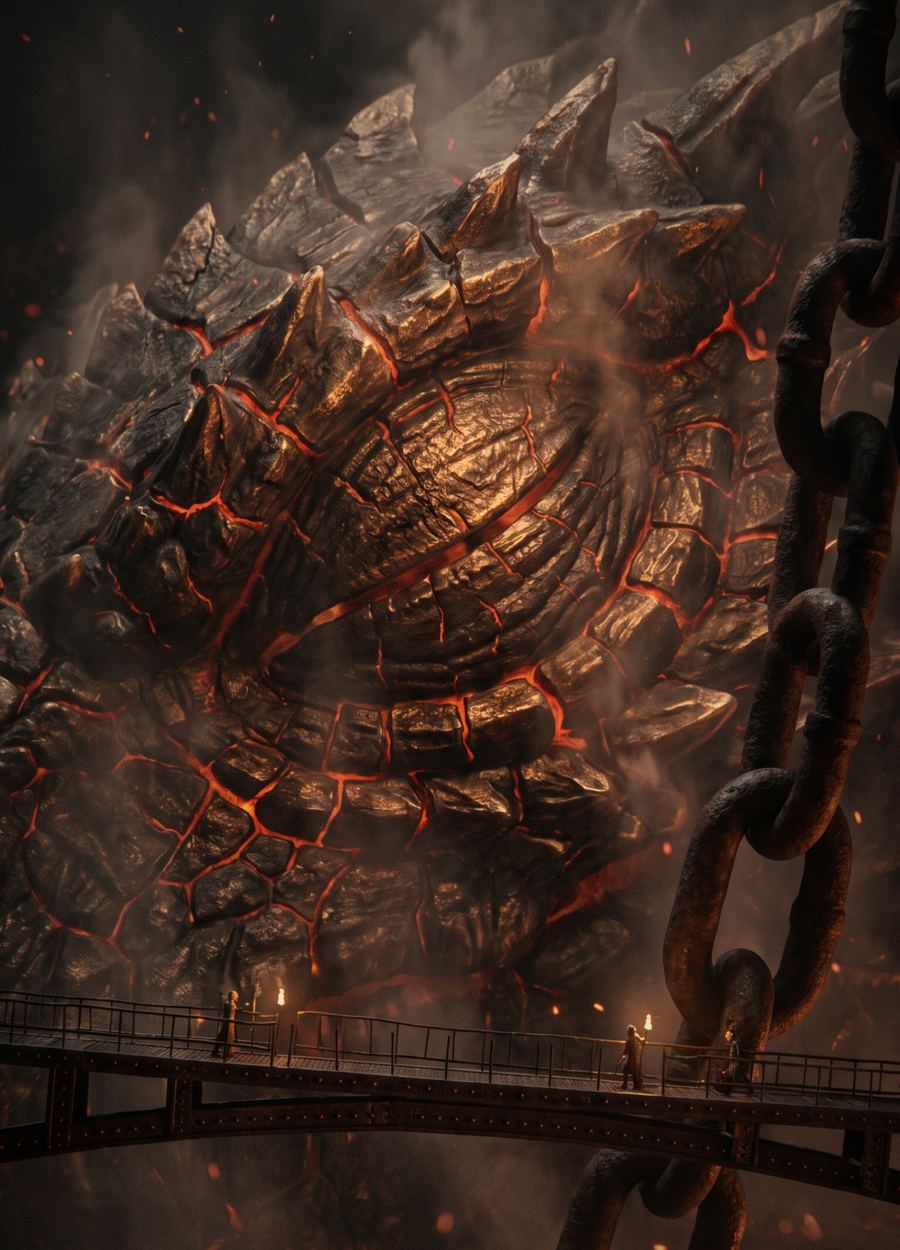
The Boiler. Deep at the mountain's root lies a vast vaulted cavern around one chained shape: an ancient dragon, so old it barely stirs, whose heat drives the Kett's great engines. Chains as thick as a dwarf's body run from its collars to anchors in the walls. Pipes and resonator cowls ring it like an organ built around a heart. The air shimmers, and it smells of hot metal and something older, animal and mineral at once. Its scales are a dull iron-grey now, the color of steel heated too long. The workers call the dragon Bellows, the way you would name a machine, and most of them have stopped thinking of it as alive.
The Berrat. The Kett's forge-heart, built in descending tiers around a pit of fire. Trolls work the lowest, hottest tiers; dwarf crews work the machinery above. Red-gold light pours upward, lighting every face from beneath like faces over a campfire. The noise is total, so everyone speaks in hand-language or not at all.
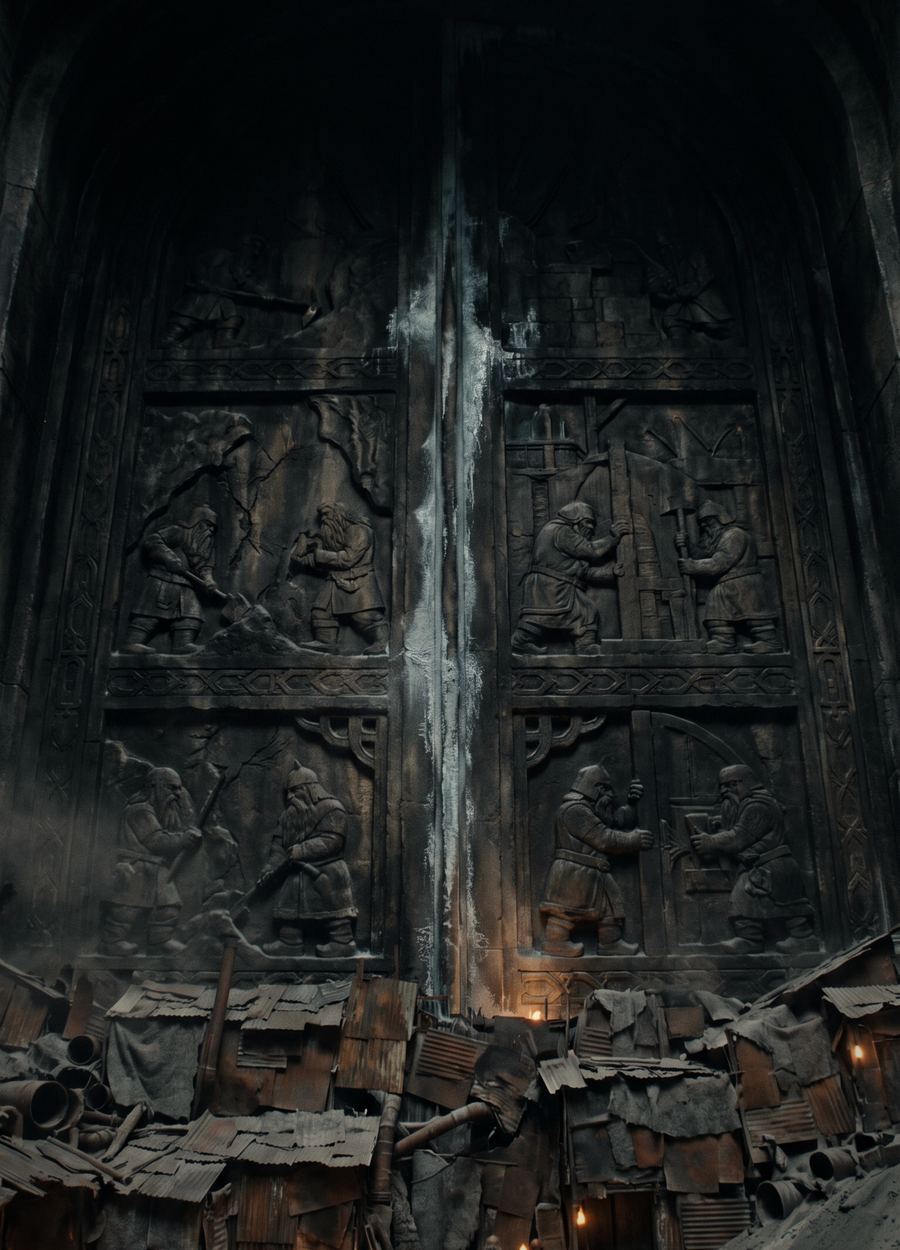
The Sumps and the Seal. Where the waste chutes empty, at the bottom of everything: a shanty town of scrap, old felt and salvaged pipe on an ever-growing slope of ash and silt, with its own rules, its own economy, and no guards. Where people go to vanish. It is heaped against the Seal itself, a wall of stone and metal so vast its top is lost in the dark, banded with brass and iron and carved over every inch with the Kett's founding story. It is the only cold place in the lower mountain, because on the other side is outside. Grimmet won't settle near it.
The Quiet Levels. Sealed galleries from before the machines, where giant polished mirrors on gimbals once caught daylight down the shafts. The hum of the Kett stops here; the silence lets you hear your own blood. The dust lies thick and undisturbed, except where it isn't. Unbonded Grimmet roost among the old mirrors, a cloud of green-gold eyes in the dark. Officially abandoned.
The Stillness. Small cells cut deep in old rock below the Quiet Levels, with room to sit but not to lie flat. A dwarf who wants to hear the mountain goes in alone, and the cell is closed behind them with fitted stone. The wall comes down only when they knock. Some knock after a few turns. Some stay a Stoking or more. Some never knock. Those who come out speak slowly, flinch at noise, and are listened to as something close to prophets.
The Groves. A few galleries high in the mountain where the old mirrors were turned to catch what little light still falls down the shafts, and trees grow: pale, slow and thin, a century to grow a single plank. Each Grove belongs to a Thane house: walled, guarded, and held sacred by the upper halls. A dwarf who has touched living wood is either very rich or somewhere they shouldn't be.
The Cross. The great market hall where four train lines meet: stalls, noise, outside colors, and every class passing through.
Getting around
- The Lines: steam trains through great bored tunnels. Brass carriages with felt seats for the wealthy; workers ride standing in open ore cars.
- Monorails hang from cavern ceilings over the farms and forges, the closest thing to flying most dwarves know. Many ride with their eyes shut.
- Lifts run up and down the mountain, and they are gated. Moving up the mountain is moving up in class; you need a pass to ride above your own air, and the guard checks it at every level gate.
- The Long Stairs: ancient stairways thousands of steps long, worn into deep dips, for everyone who can't afford the lift.
- The post moves by pneumatic tube in brass canisters, and voices move through the brass speaking-horns in every home and office. Someone is usually listening.
Part ElevenWhat the Chronicle Says
The dwarves' history is carved into the walls of the Chronicle Halls, miles of it. This is the story it tells.
- The Finding, some two thousand years ago. The dwarves came up out of the lowlands and found Tolmar empty, a gift waiting to be dug.
- The Age of Mirrors. The golden age: daylight brought down the shafts by great mirrors, the first Groves, the founding families. Every great litany begins here.
- The Wrath, twelve hundred years ago. A dragon came out of the sky and burned the outer halls. The heroes of the founding families fought it down into the deep and bound it in chains, then closed the great door to keep its kind out forever. The Sealing is remembered as a victory.
- The Compact. After the Sealing, the trolls came up from the deep places and were granted the Warmth in return for working the forge.
- The Age of Iron. Mirrors gave way to electric lamps, prayer gave way to machines, and the bound dragon was harnessed to the Boiler.
- The Docks, three hundred years ago. Airships were built, the High Doors were cut, and the orcs came in from the slopes to crew them.
That is the history every dwarf child learns to read.
Stone, of course, can be recut.
Part TwelveWhat They Believe
Three peoples, three faiths, and each one says exactly who they are.
The dwarves: the Keeping
Dwarves believe Tolmar keeps them: the mountain as a sheltering body, faithful to those who stay inside. To leave is to abandon the Keeping. Their scripture is the carved chronicle, and its cutters are the nearest thing the Kett has to priests. Dwarves swear oaths with a palm pressed flat against the stone, which is part of why the old walls are polished at shoulder height: centuries of hands, and centuries of promises. Their oldest prayers are recited in an ancient tongue nobody understands anymore.
When a dwarf dies, there is no soil to bury them in and no fuel to spare for burning. The body is carried down to the forge and rendered, and the family watches the molten ash-alloy run into the Kett's works: rails, pipes, fittings. The dwarves' dead become the mountain's machinery. And only trolls can stand at those fires, so every dwarf family must hand its dead to the people it looks down on.
The orcs: the Open
To an orc, the sky is not a void. It is where they came from and where they go. The dead are carried aloft by airship and given to the wind over the range, and their cords are unknotted and shared among their kin. Orcs swear by breath, exhaling onto an open palm; inside the Kett, they swear at the air vents, the nearest thing to sky. They pray by naming the stars. Grounded orcs, who have never seen one, learn the names by rote.
Kett law says everyone who dies inside the Kett goes to the forge. That includes grounded orcs. So the sky crews quietly smuggle their dead out on the airships. Everyone knows. It is illegal, it is constant, and it is one of the sharpest wounds between the peoples.
The trolls: the Chorus
Trolls don't worship the mountain. They believe they are its first children, and that it is alive and listening. They sing to it. A troll's oath is a held note, hummed along by witnesses. And trolls are never rendered: the chorus gathers, the song opens the rock, and the stone closes around the dead. The walls of the Warmth are made of troll ancestors.
The dwarves' dead become machinery. The trolls' dead become home.
Part ThirteenMagic
Magic in the Kett is made of sound, and it always costs something.
Everything in the mountain has a true note: stone, metal, fire, flesh. Magic is tuning, sounding a thing's note precisely enough to change it. Loosen a seam, harden a blade, quiet a flame, close a wound. The old tongue, the language of the ancient prayers, was built for tuning; its long open vowels carry true notes that modern speech has lost.
It comes in three scales:
- The whisper: one voice, a small working. Warming a hand, finding a flaw in stone. The price is small and fades.
- The voice: one caster, a real working. Splitting rock, mending a limb. The price is lasting.
- The chorus: many voices together. Only the trolls still do it, and it is the only scale that could move a mountain.
The price: you become what you sing
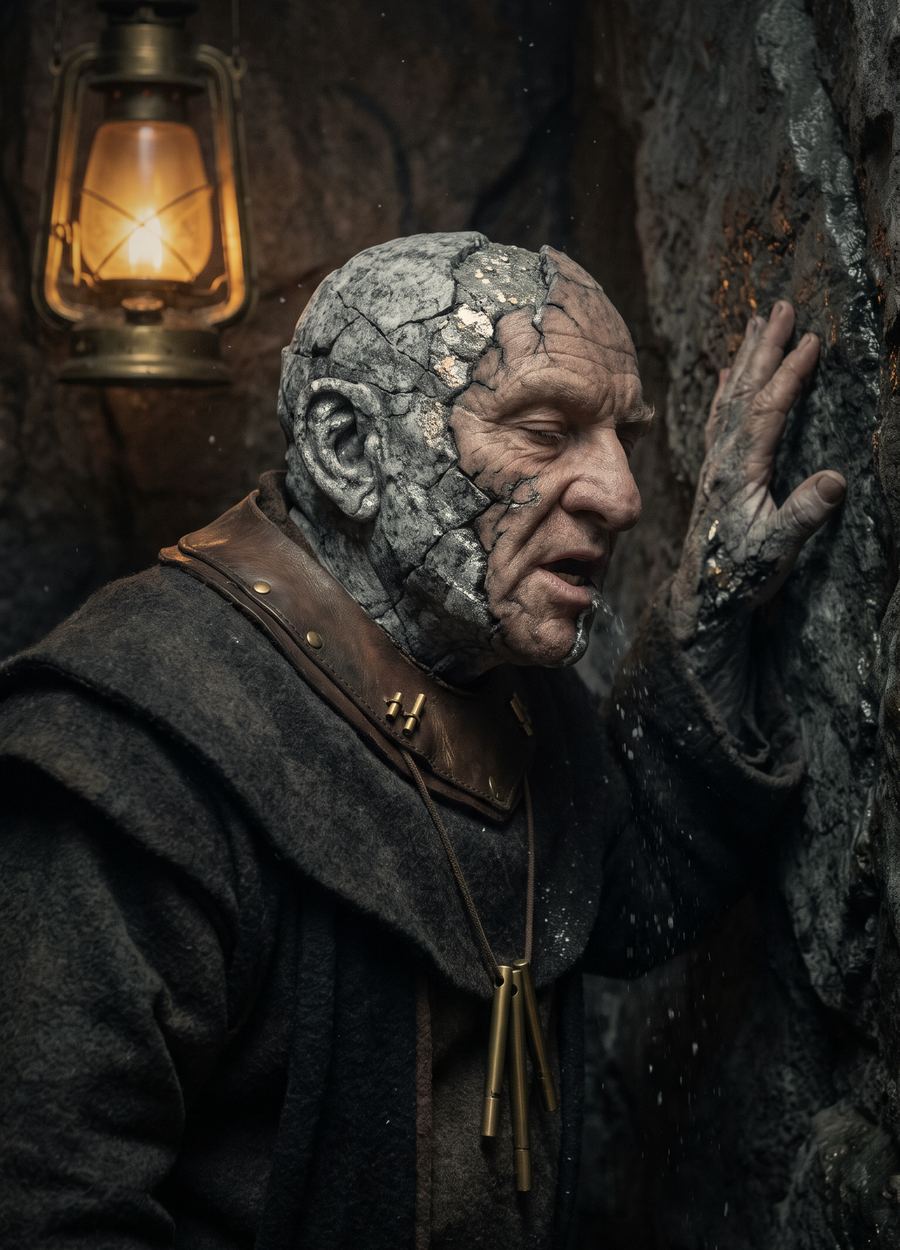
To match a thing's note, you take a little of it into yourself. Casters who work stone slowly turn to stone: stiff joints, grey skin, and in the end a statue. Casters who work metal get it in their blood. Casters who work fire burn from within. The most powerful casters alive are barely alive, and it shows on their bodies. That is why magic is rare, and why everyone does not use it.
Those who may cast are licensed by the Guild and called Tuners. They are measured regularly for how far they have drifted, and when stone starts to grow in them, chisel-surgeons cut it away. It is grim work, and the only way to buy a caster time. Casting without a license is a crime.
Most of the Kett's work is done by machines instead: resonators, tall organ-like banks of pipes and cowls that sound true notes mechanically, with a hum you feel in your teeth. No caster pays for what a resonator does.
Part FourteenBrass and Steam
The Kett has electric light, steam trains and speaking-horns, and it builds all of them by hand. A few things you would see in any hall:
- Coil lamps everywhere, in brass cages. For carrying, a hand-wound crank lamp that dims as it runs down.
- Clockwork limbs. Accidents are common, so artificial limbs are too. Cheap ones are black iron and loud; fine ones are brass, quiet and engraved. A hand shows what someone earns.
- Bellows-masks: hand-pumped breathing aids for the grey cough.
- The tinker's kit: a listening rod, a slim steel rod pressed between a machine and the bone behind the ear, carrying a bearing's grind or a crack's ring straight into the skull; a leather roll of true-forks, tuning forks struck to test a part's note, since cracked metal rings false; brass goggles with hinged lenses that flip down in layers; calipers and gauges; and the mark punch, the steel stamp of a craftsman's maker's mark.
- Air-rifles: the only guns in the Kett, long, all-metal and pump-charged, carried only by the mountain guard. Powder is never used underground. The fumes, the fire and the bang could crack stone.
- Deep-gas: a lighter-than-air gas bled from vents in the mountain's depths. The orcs need it to fly. The dwarves control it.
Part FifteenWho Holds Power
Power in the Kett is made of three things: history, machines and air.
The Thanes. A council of the great families. A family's right to a seat rests on its litany: the older and more glorious, the stronger the claim. The Thanes control the chronicle, the law, the mountain guard, and most importantly the air. They decide how ventilation is metered, which means they decide who breathes clean.
The Guild. The trades: masters, journeymen and apprentices. The Guild runs everything that works: the forge, the Boiler, the resonators, the Tuners and the gauging. The Thanes have legitimacy; the Guild has the machines. The balance between them is polite in public and ruthless in private.
The Listening Office. Officially, it runs the speaking-tubes. In practice, it listens to everything, and it quietly "corrects" problems. Its officers wear plain grey felt with no pins, nothing to mark them, and some of them train their Grimmet to mimic on purpose: birds that sit on stairwell railings and repeat what they hear.
The mountain guard. The only armed force. It guards the Seal, the docks and the Thanes' halls, in modern riveted plate: new steel with no litany behind it.
The orcs have no seats and no vote, only a Dock Master to speak for them, and the quiet power of controlling what comes in from outside. The trolls have the Compact.
Law
There are no prisons in the Kett; space and air are too precious to spend keeping people. Instead:
- Thinning: your air is cut and you are moved down the levels.
- The worst stations: forced labor at the forge's most dangerous posts.
- Sent down: cast down the chutes into the Sumps.
- Unmade: your name ground out of the chronicle and your litany silenced. Legally, you never existed.
- Given to the Mirr: the death penalty. The condemned is put out through the High Doors into the open sky. No blood, no executioner. Most do not survive the fall or the cold. What happens to those who do, nobody inside knows.
For orcs, the sky is no punishment. Their worst sentence is grounding: taken from their crew, cord cut short, never to fly again.
A licensed tinker's reading of a broken part carries the weight of law. The gauge doesn't lie. Almost nothing else a journeyman says counts for much.
Money
Metal is worthless in a mountain made of it. What is scarce is air, light, wood, color, and anything from outside. So wages are paid in draughts, punched brass tokens each worth a measure of air. The Kett's money is, underneath everything, breath. When the Thanes change the rate, the lower levels feel it in their lungs.
Laborers trade pinches of grit as small change, and real silver from the outside world circulates in the Sumps, illegal and untraceable. Debt is counted in Stokings and worked off at the worst stations, and many lower-level families are born owing. The trolls stand outside it all, paid in rights instead of tokens, which is a large part of why no one can bully them.
Part SixteenThings in the Dark
The Kett is not only its peoples. Other things live in the mountain, and some of them were there first.
- Dragons are creatures of pure sound, speakers of the old tongue, and rare in the world. They live for ages and remember as nothing else does.
- Spiders are everywhere, small ones in every corner and pipe joint. Dwarves tolerate them because they eat mites; Grimmet eat them.
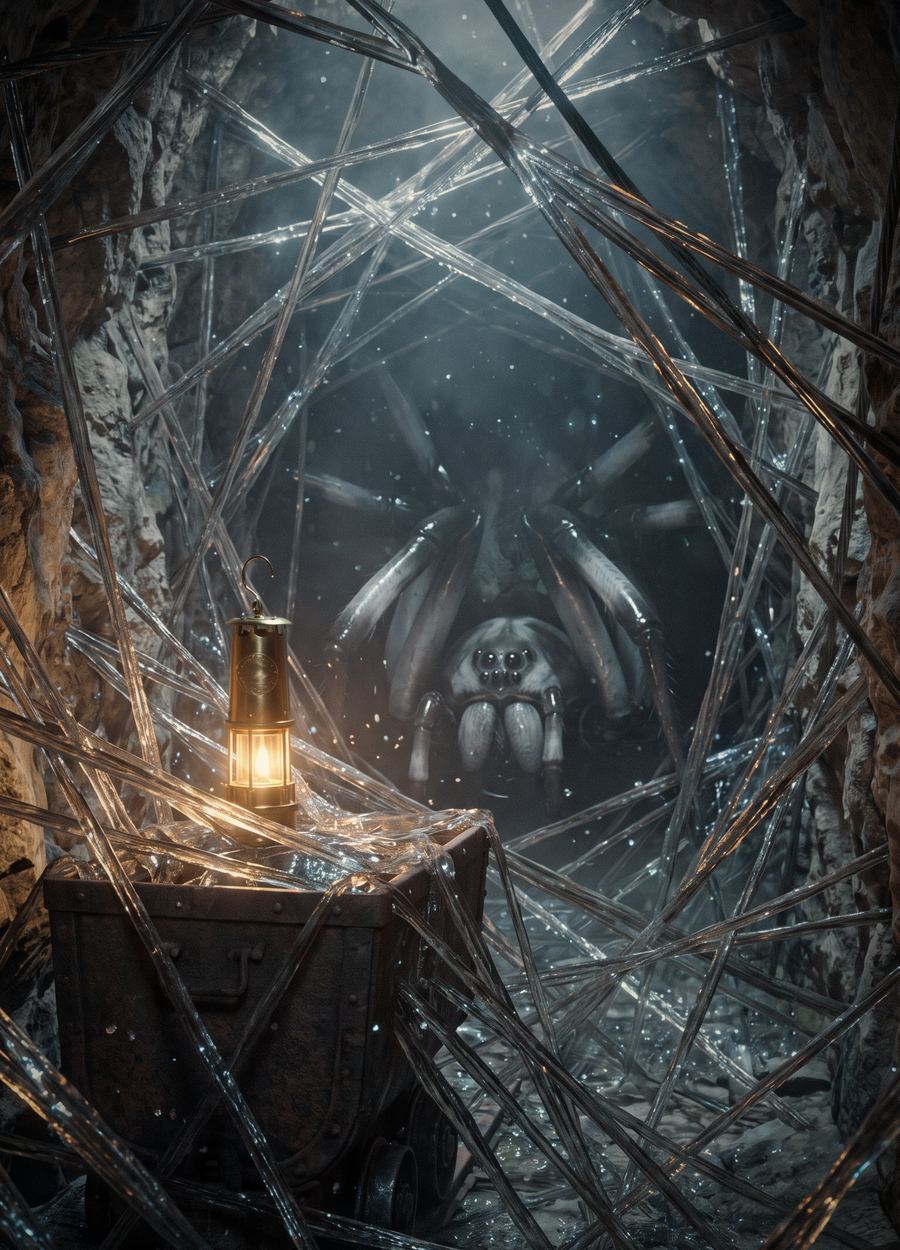
- Glass-weavers are the rare giants, as broad as a dwarf is tall. They spin silk drawn from the rock itself, which hardens in the air to something like glass. A nest turns a passage into a crystal lattice overnight and stops all work. Clearing one takes fire and rifles, and people die. The silk from abandoned nests is the finest thread in the Kett, and some people go looking for nests on purpose.
- Rockmaws: huge, slow, blind tunnelers that bore through stone by eating it. The Kett harnesses them to cut new passages. A few in the deep were never tamed, and now and then a tunnel opens that nobody cut.
- The Pall: a thin, faintly glowing veil of living matter that feeds on smoke in the upper vents. Supposedly harmless. But it swallows sound; halls where it gathers go dead-quiet, as if the air were listening. The Grimmet won't go near it.
- Shalebacks: ambush predators shaped exactly like a flake of loose rock, lying still for days in unused passages. They are the reason nobody walks the Quiet Levels alone.
- And the small life: pale lampwings swarming the lamps at Silt; hairless gnawlings in the Sumps that eat anything, felt included; blind eels in the rivers; tiny red heat-mites the trolls pick off each other absently; and brittle white cave-crabs, the Grimmet's favorite food.
Part SeventeenHow They Sound
You can tell who is speaking in the Kett with your eyes closed.
- Dwarvish is short and clipped, full of hard stops and doubled consonants, like tools hitting stone: Berrat, Tolmar, Kett, Brodd. It was worn down from an older, flowing tongue of long vowels, Veirath, Thalomar, Kaethil, which survives now only in prayers nobody understands. A people who once sang, and now clang.
- Orcish is made to carry over wind: breathy and open, soft sounds and long vowels, words that end like a breath let go. Hael is sky. Aweh is wind and breath. Sky crews also whistle to each other across a gale in a register no dwarf can make.
- Troll speech is deep and resonant, low vowels and rumbling sounds: Moraun, Urrum, Vuorra. A troll's true name is sung, not spoken; what dwarves call them is only a flattened fragment of it.
One small thing to notice: Hael and Mirr mean the same thing. Sky. One people says it as a prayer, the other as a curse.
Words of the KettA Short Glossary
- the Kett
- the nation inside the mountain, and its home
- Tolmar
- the mountain; "the stone that holds"
- Selunethar
- the range; "the long spine"
- the Berrat
- the great forge
- the Boiler
- the dragon's chamber at the root
- the Warmth
- the trolls' sung halls
- brandstone
- the coal-like fuel; its smoke is everywhere
- Grimmet
- the owl-faced familiar birds
- Siltwardens, Silts
- the clean-up crews
- Brasskin
- children of dwarves and orcs
- draughts
- brass tokens worth a measure of air
- grit
- the laborers' mineral stimulant
- the turn
- a day; three shifts: Brand, Ash, Silt
- the Blow
- the steam note that changes shifts
- the Hush
- the daily minute of silence
- the Stoking
- the year, and its festival
- the Measure
- dwarves and orcs singing together
- Stones
- the brothhouse betting game
- Tuners
- licensed casters
- mirr
- sky; a dwarven curse
- sky-sick
- a dwarf's dread of the open air
- unmetered
- born without a registered breath
- the Seal
- the great door, shut for twelve centuries
Last of allA Few Faces
No stories here, just people you might pass on the stairs.
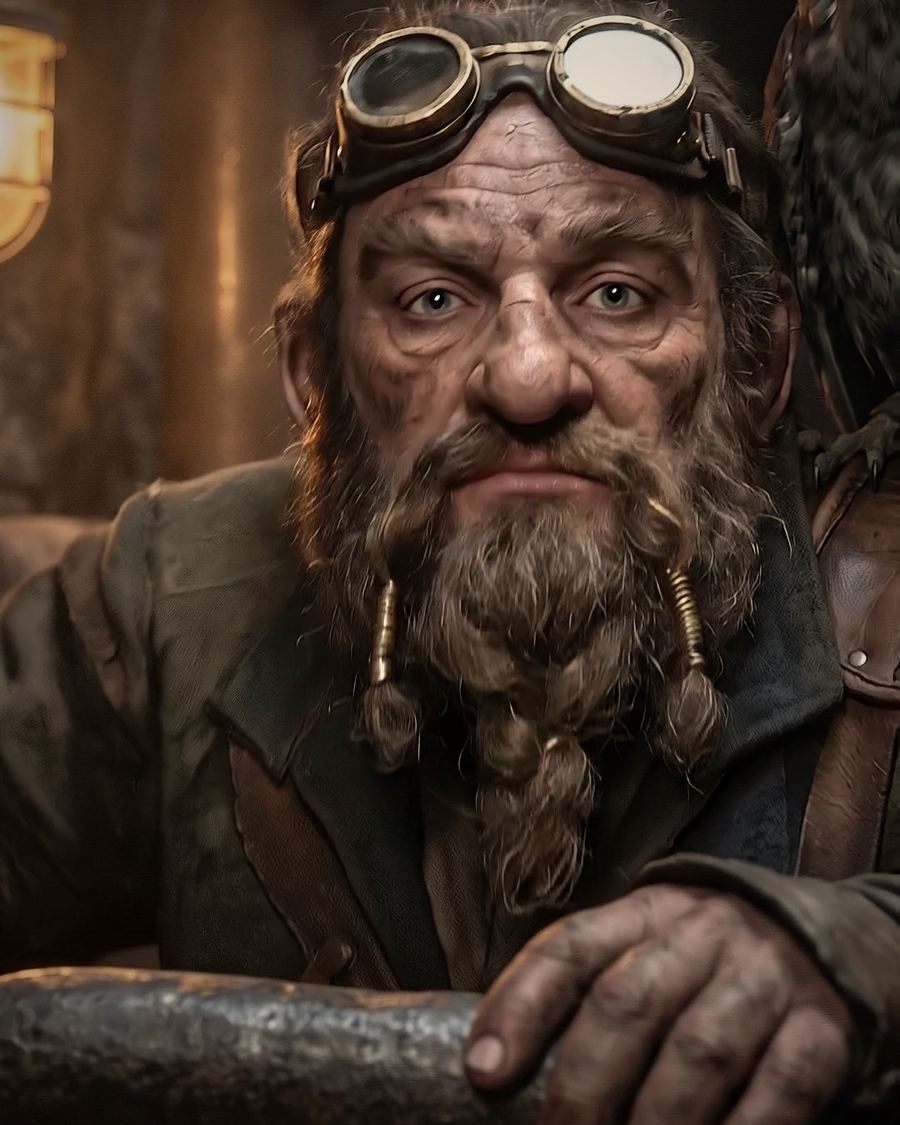
Deis, a journeyman tinker who tends the dragon's chains at the Boiler, mostly on the shifts nobody wants. He can hear a failing valve three halls away and notices almost nothing about people. His name sounds nothing like anyone else's. At the end of every shift he checks his own tools one by one. It is the only thing that calms him.
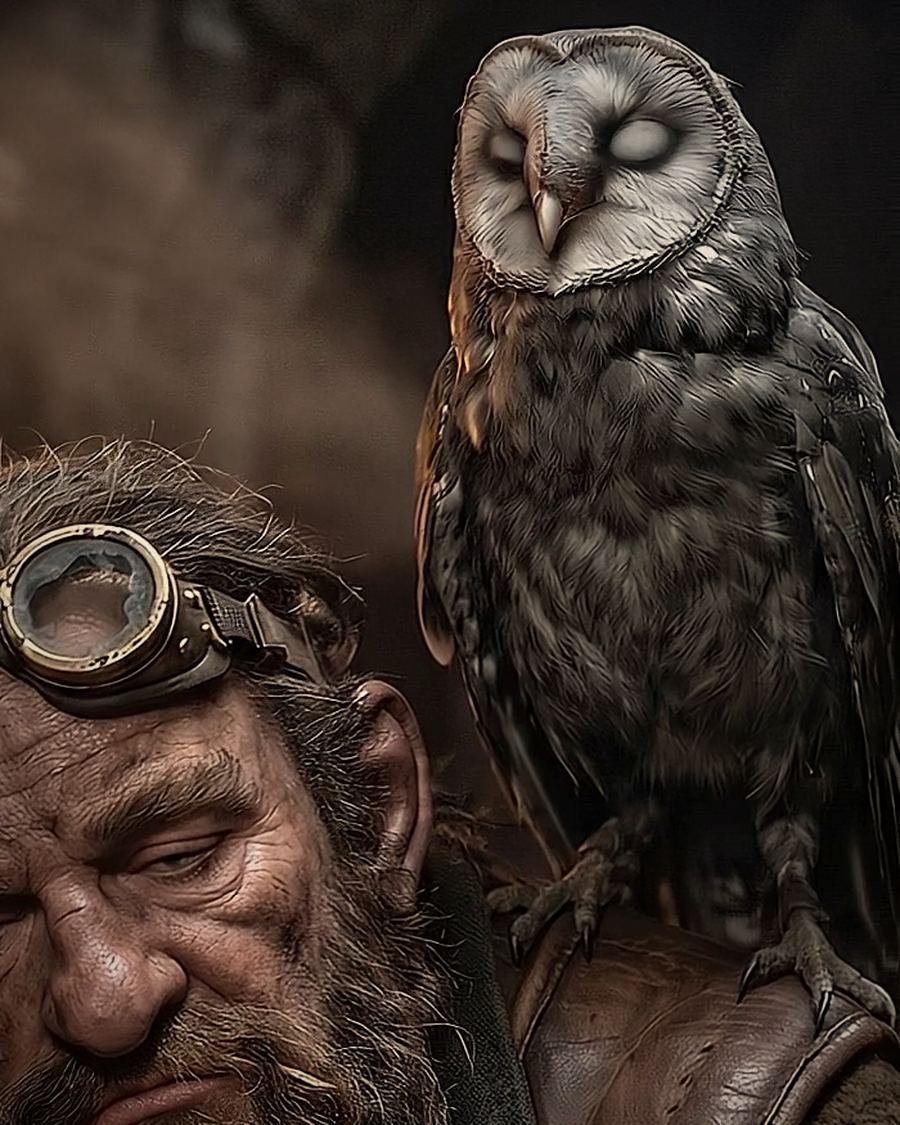
Soot, Deis's Grimmet, old and battered, handed down from Deis's master. Soot eats from Deis's plate. Soot also curses.
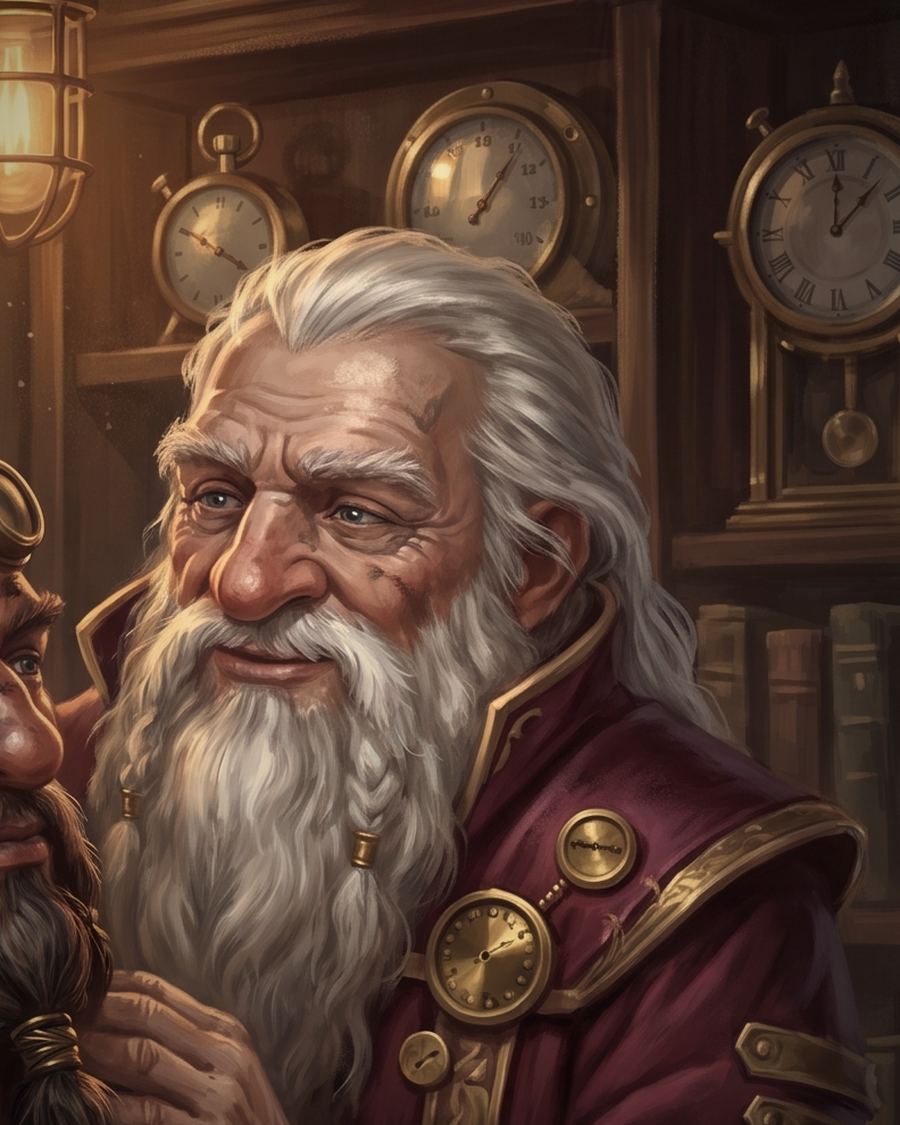
Ebran, Deis's master, the most honored living tinker in the Kett. His mark is on the Boiler's works. Younger tinkers speak his name like a litany.
Fenna Brodd-Hawen, a Brasskin crew-boss of the Siltwardens, who can tell from the dust who stood where, and when.
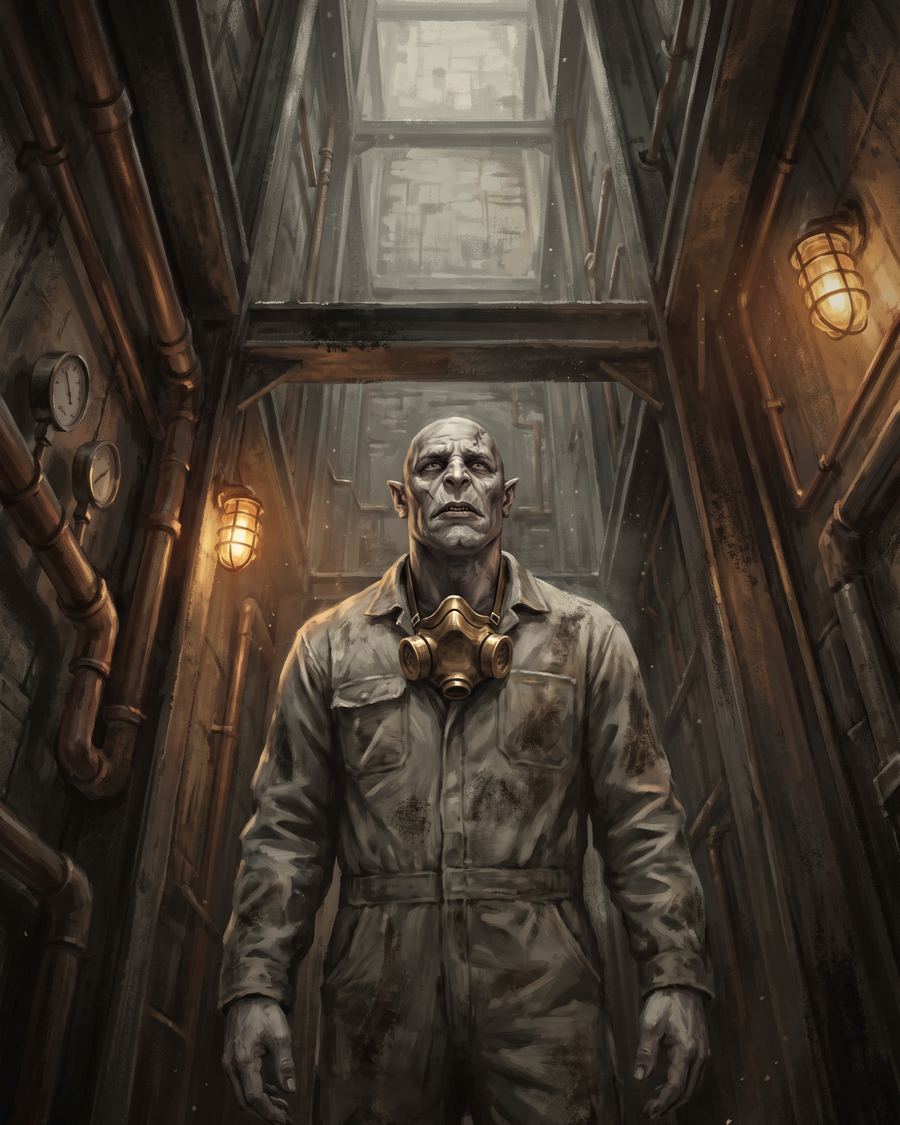
Uskaf of Lower Nine, a grounded orc and a Silt, who wants nothing in the world so much as to see the sky.
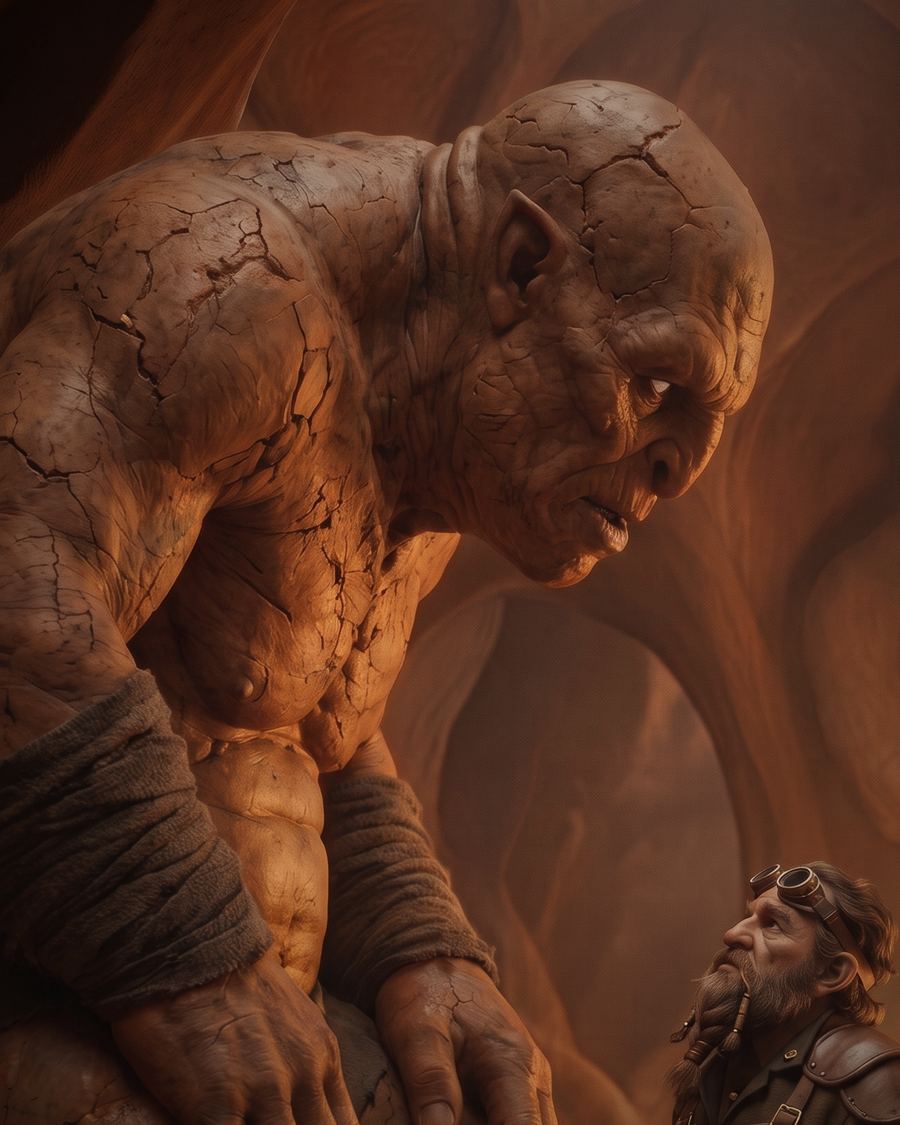
Moraun, Speaker for the trolls, who bargains the Compact with the patience of stone.
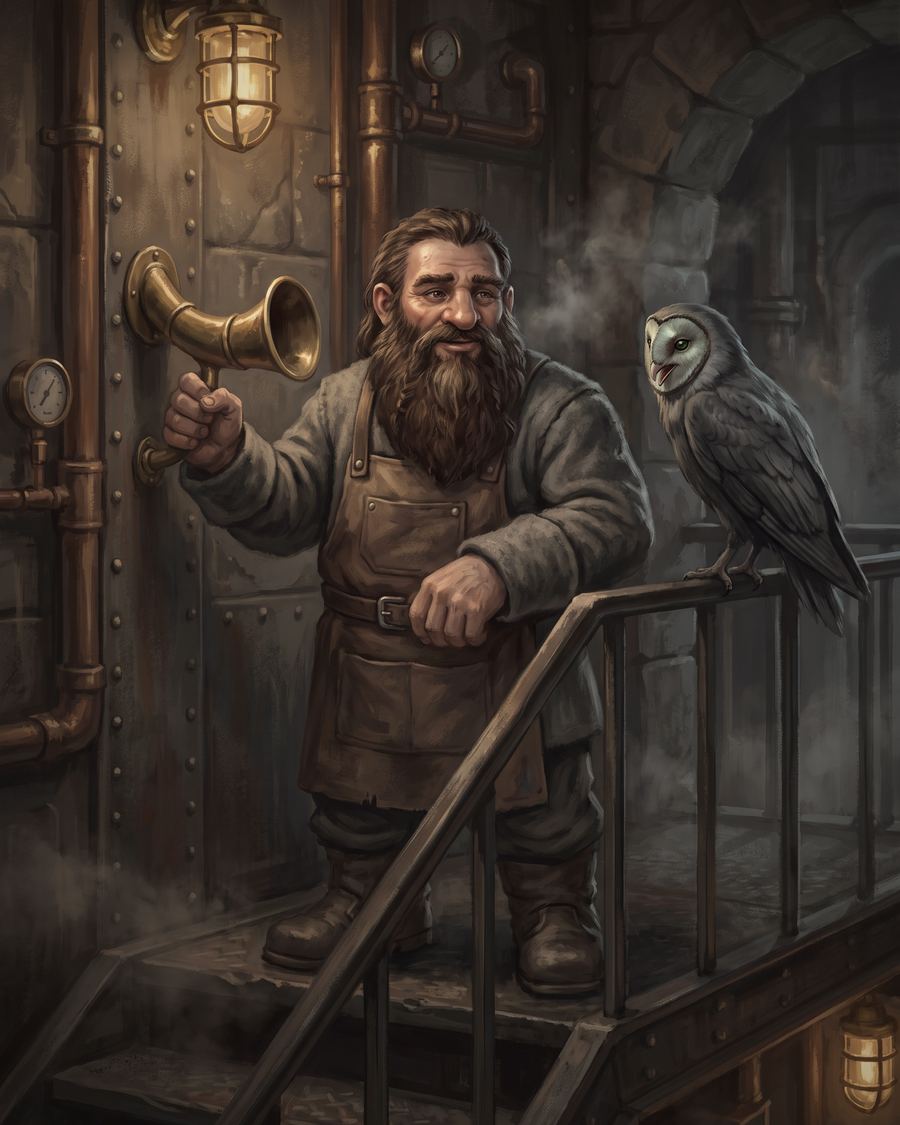
Halrit, an officer of the Listening Office: polite, patient, friendly enough, with a bird that remembers everything it hears.
There is more in the dark.
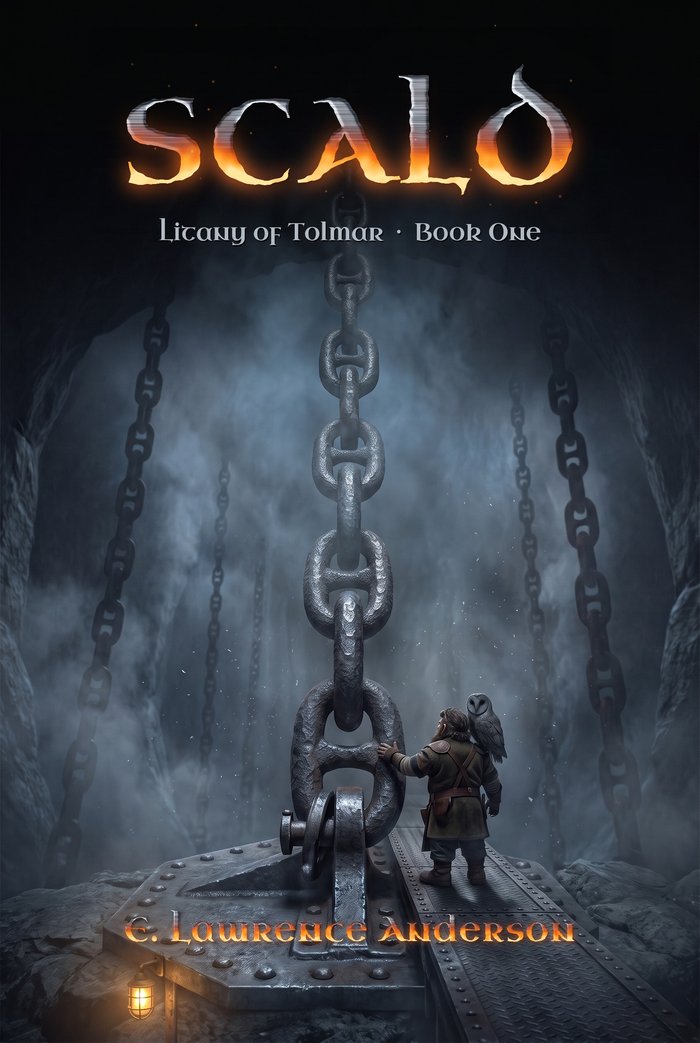
Book One of Litany of Tolmar
January 16, 2027